Mobility vs Flexibility: Why Active Mobility Training Helps You Move Better, Stronger, and With Less Pain
By a Doctor of Physical Therapy at Living Well Physical Therapy and Performance
If you are an active professional in your 30s, 40s, or 50s living in Milwaukee’s North Shore, chances are you stretch. You stretch before workouts, after long workdays, or when something feels tight. Stretching feels productive and sometimes it helps in the moment.
But at Living Well Physical Therapy and Performance, we see this every day. Many active adults who stretch regularly still feel stiff, achy, or limited when they move. Their flexibility improves, but their pain does not. Their range of motion looks better, but their movement still feels restricted.
This is where understanding the difference between flexibility and mobility becomes critical for long term joint health and performance.
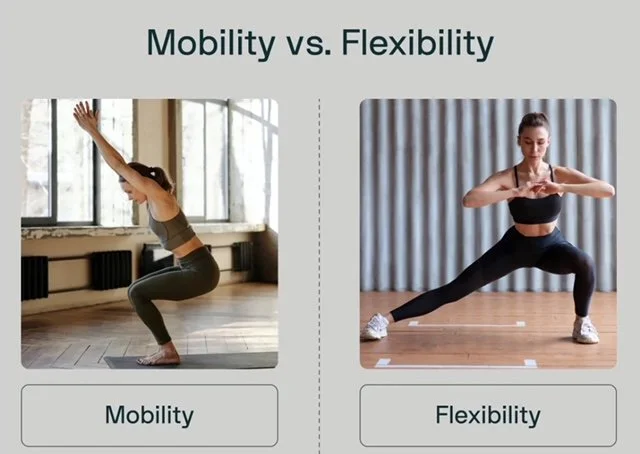
👀 Flexibility and mobility are not the same thing
⭐ Flexibility refers to how far a muscle can be stretched. It is a passive range of motion. Think static stretching, yoga poses, or holding a stretch for thirty seconds.
⭐ Mobility is your ability to actively control movement through a range of motion using strength and stability.
In simple terms, flexibility is how far you can move when something else helps you. Mobility is how well you can move yourself.
Many active adults are flexible but lack mobility, which is a major reason pain and stiffness keep returning.
⚠️ Why flexibility alone does not fix pain
As Doctors of Physical Therapy specializing in performance physical therapy in Milwaukee’s North Shore, one of the most common things we hear is, “I stretch all the time, but I still feel tight.”
That tightness is often not a lack of flexibility. It is a lack of control.
Your nervous system creates tension when it does not trust a position. If your body feels unstable or weak at certain ranges of motion, it tightens as a protective strategy. Stretching may provide short term relief, but it does not solve the root cause.
This is why many active adults experience recurring hip pain, low back pain, shoulder pain, or neck stiffness despite consistent stretching.
🤸 What active mobility training actually does
Active mobility training combines range of motion with strength and control. It teaches your body how to move well and feel safe in those positions.
Instead of passively pulling on muscles, you actively use muscles to control movement. This improves joint stability, coordination, and confidence.
For active professionals balancing training, work stress, family life, and limited recovery time, active mobility training is far more effective than stretching alone.

📉 How mobility training reduces pain and prevents injury
Pain often comes from poor load management and inefficient movement, not just stiffness.
Active mobility training helps by improving joint control and distributing forces more evenly across muscles instead of joints and tendons. When muscles do their job, joints are protected.
This is why performance based physical therapy focuses on mobility rather than just pain relief. Improved mobility leads to better movement patterns, lower injury risk, and longer lasting results.
💪Why mobility makes you stronger
Strength is not just about lifting heavier weights. Strength is about owning positions.
If you cannot control your hips at the bottom of a squat, your knees and low back take more stress. If you cannot control your shoulders overhead, your neck and elbows often suffer.
Active mobility training improves how you express strength. It allows you to train harder while reducing wear and tear. This is essential for runners, golfers, strength trainers, and recreational athletes throughout Milwaukee’s North Shore.
⏳ Mobility matters more as you age
As we move through our 30s, 40s, and 50s, recovery changes. Time becomes limited. Stress increases. Sleep and hydration are often compromised.
This is where mobility training becomes essential for longevity.
Active mobility helps
maintain joint health
improve recovery
support long term performance
It allows you to stay active without constantly dealing with flare ups or setbacks.
The goal is not to move like you did at 25. The goal is to move well for the life you have now and the years ahead.
🏋️ Why performance physical therapy prioritizes mobility
At Living Well Physical Therapy and Performance, we do not rely on generic stretch programs.
We assess movement quality, strength, joint control, and load tolerance. From there, we build individualized mobility and strength programs designed for your goals and lifestyle.
This is what separates performance physical therapy from traditional physical therapy. We help active adults move better, train smarter, and stay active for life.
🔑 The takeaway
Flexibility feels good, but mobility creates lasting change.
If you want to move better, feel stronger, and have less pain, your body needs more than stretching. It needs active control, strength through range, and intelligent movement training.
Mobility is not about doing more. It is about doing what works.
✅ Ready to move better in Milwaukee’s North Shore?
If you are an active professional looking for performance physical therapy in Whitefish Bay, Shorewood, Bayside, Mequon, or surrounding areas, our team is here to help.
We specialize in helping active adults reduce pain, improve mobility, and build strength so they can continue doing what they love without limitations.
Schedule a movement assessment at Living Well Physical Therapy and Performance and learn how active mobility training can help you move better, stronger, and with less pain.
Feel better. Move better. Live well.