
Spring Running and Stress Fractures
By Dr. Ashley Martin-Metcalf, Doctor of Physical Therapy at Living Well Physical Therapy and Performance
💡 What Runners Should Know
As runners move from winter training into spring running, we often see an increase in bone stress injuries, commonly known as stress fractures. This transition usually includes more outdoor miles, different running surfaces, and changes in training volume, all of which can place more strain on the body.
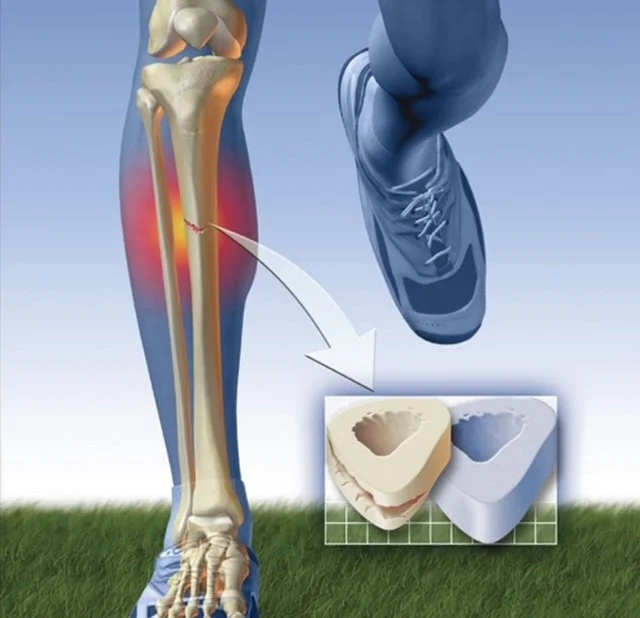
🤕 What Is a Bone Stress Injury
Bone stress injuries develop gradually over time. They often start as a stress reaction, progress to a stress fracture, and in more serious cases can become a complete fracture if not addressed early.
⚠️ Common Stress Fracture Symptoms in Runners
Early symptoms usually feel like a dull or aching pain that improves with rest. If training continues, the pain can worsen quickly and may begin to occur during walking, running, or even daily activities.
Stress fractures account for about ten percent of all athletic injuries, with runners making up a large portion of these cases. Most bone stress injuries occur in the lower body, including the foot, shin, and hip.
❓Why Do Stress Fractures Happen
Stress fractures are rarely caused by one single factor. In most runners, they develop due to a combination of stress on the body and limited recovery.
Common risk factors include:
Sudden increases in mileage
Poor nutrition
History of stress fractures
Running more than forty miles per week
Low body weight
Genetics
Inefficient running mechanics
Early sport specialization
🛏️ Recovery and Prognosis
Recovery depends on both the severity and location of the injury. Imaging such as an MRI or bone scan may be used to confirm the diagnosis. More severe injuries may require longer rest periods, structured rehabilitation, and in some cases, surgery.

🏋️ How Runners Can Reduce Their Risk This Spring
As spring training ramps up, runners should focus on the things they can control. Gradually increasing mileage, fueling properly, building strength, and paying attention to running mechanics can all help reduce injury risk.
At Living Well, we take a proactive approach to runner health. We offer video gait analysis and strength testing using force plates and a dynamometer to identify potential risk factors before they turn into injuries. Using this information, we create individualized plans to help runners stay healthy and perform at their best.
If you are increasing your training or noticing early signs of discomfort, addressing it early can make a big difference and help keep you running pain free.
