5 Rotational Exercises Every Runner Should Add to Their Training
By a Doctor of Physical Therapy at LWPT & Performance
Improve performance, prevent injury, and build stronger, more resilient movement
Running may seem like a straight-ahead sport—but your body doesn’t work in straight lines alone.
Every stride involves subtle rotation through the hips, pelvis, and trunk. If your training only includes forward-and-back movements, you're missing a critical piece of performance—and potentially setting yourself up for injury.
At Living Well Physical Therapy & Performance, we often see runners dealing with issues like IT band pain, hip tightness, low back discomfort, or recurring hamstring strains. One common theme? Limited rotational strength and control.
Here are five rotational exercises every runner should add to their training to improve efficiency, reduce injury risk, and build total-body resilience.

Why Rotation Matters for Runners
Even though running happens mostly in the sagittal plane (forward/backward), your body must control rotation with every step.
Each stride requires:
Hip rotation to load and push off efficiently
Pelvic control to maintain stride symmetry
Core rotation strength to transfer force
Arm swing rotation to support rhythm and efficiency
Without adequate rotational strength:
Energy leaks occur during stride
Stress increases on knees, hips, and low back
Running efficiency decreases
Injury risk rises
Running economy
Power production
Stability during fatigue
Injury resilience
1️⃣ Half-Kneeling Cable or Band Chop
Why it matters:
This exercise builds rotational core strength while teaching your hips and trunk to work together—essential for stride efficiency.
How to do it:
Set up in a half-kneeling position
Hold a resistance band or cable above shoulder height
Pull diagonally across your body toward your opposite hip
Control the return slowly
Keep hips stable throughout
Reps:
2–3 sets of 8–10 reps per side
Runner Tip:
Focus on control, not speed. Rotation strength starts with stability.

2️⃣ Standing Medicine Ball Rotational Throws
Why it matters:
This develops explosive rotational power, improving stride force and push-off strength.
How to do it:
Stand perpendicular to a wall
Hold a medicine ball at chest height
Rotate through your hips and throw the ball into the wall
Catch and repeat smoothly
Reps:
2–3 sets of 6–8 throws per side
Runner Tip:
Power comes from the hips, not just the arms.
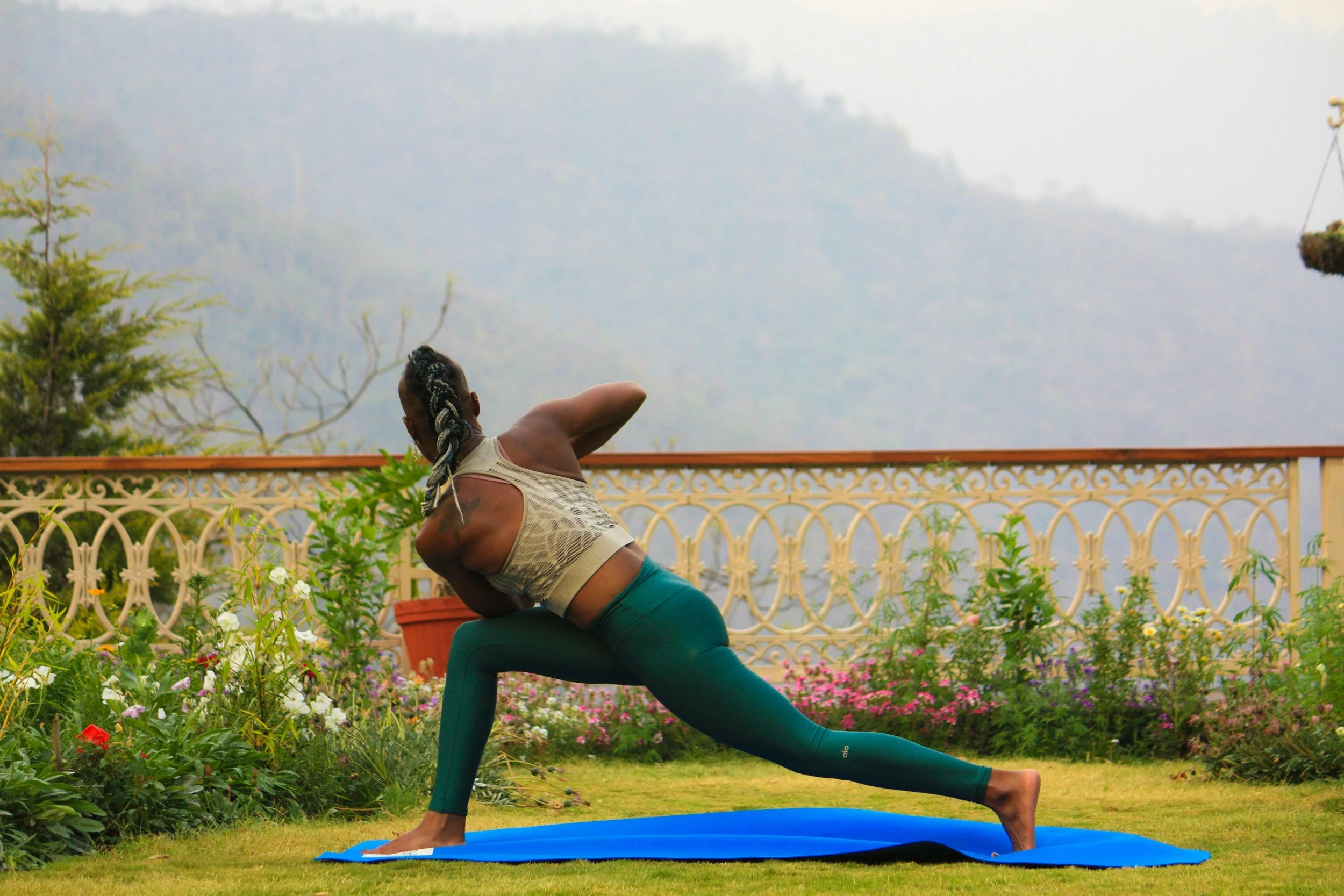
3️⃣ Lateral Lunge with Rotation
Why it matters:
Running requires strength in multiple planes. This exercise strengthens hips while improving rotational control.
How to do it:
Step into a lateral lunge
Rotate your torso toward the lunging leg
Return to standing
Repeat on alternating sides
Reps:
2–3 sets of 8–10 reps per side
Runner Tip:
Keep your knee tracking over your foot throughout the movement.
4️⃣ Single-Leg Romanian Deadlift with Rotation
Why it matters:
Running is essentially a series of single-leg movements. This exercise builds rotational stability in the hip and trunk.
How to do it:
Stand on one leg
Hinge forward into a single-leg deadlift
Rotate your torso slightly toward the stance leg
Return to standing
Reps:
2–3 sets of 6–8 reps per side
Runner Tip:
Balance matters more than weight. Start light.
5️⃣ Bear Crawl with Shoulder Taps
Why it matters:
This builds rotational control through the shoulders and core—important for arm swing efficiency and trunk stability.
How to do it:
Start in a bear crawl position
Lift one hand and tap the opposite shoulder
Keep hips steady
Alternate sides
Reps:
2–3 sets of 10–16 taps
Runner Tip:
Minimize side-to-side shifting.
💡 When Should Runners Add Rotational Training?
You don’t need a separate workout—just integrate rotation into your strength routine 2–3 times per week.
Ideal times:
After an easy run
During cross-training days
As part of a warm-up progression
Avoid adding high-power rotation work immediately before long runs or races.
🤕 Common Runner Injuries Linked to Poor Rotational Control
If you're experiencing recurring issues, limited rotational strength may be part of the problem.
Common conditions we see include:
IT band syndrome
Runner’s knee (patellofemoral pain)
Hip flexor irritation
Low back tightness
Hamstring strains
Improving rotational strength often reduces stress on these areas.
⚠️ Signs You May Need More Rotational Training
You might benefit from rotational exercises if you notice:
Frequent tight hips
Uneven stride patterns
Knee pain during longer runs
Low back discomfort after runs
Reduced performance despite consistent training
These are all signs your body may not be efficiently controlling movement in multiple planes.
🏃 How Rotation Improves Running Performance
Rotational training supports:
Better force transfer
Stronger trunk rotation improves energy flow from the hips to the legs.
Improved stride efficiency
Less wasted movement means better endurance.
Reduced injury risk
Controlled rotation protects joints and soft tissues.
Stronger finishes
Better mechanics hold up under fatigue.
💭 Final Thoughts: Train Rotation to Run Better
Running isn’t just forward motion—it’s controlled rotation, stride after stride.
If you want to run faster, stay healthy, and build long-term resilience, rotational strength training should be a regular part of your routine.
Start by adding 1–2 of these exercises this week, then build from there.
Your hips, knees, and back will thank you.
🏋️ Want Help Building a Runner-Specific Strength Program?
At Living Well Physical Therapy & Performance, we specialize in helping runners stay healthy, move efficiently, and perform at their best.
Whether you're training for your first 5K or chasing a PR, our team can help you:
Improve running mechanics
Prevent recurring injuries
Build runner-specific strength
Return to running pain-free
Schedule your Gait Analysis today and start running stronger.